
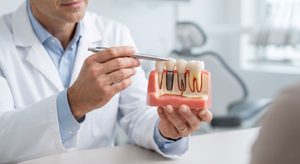
If you’re seeking a beautiful and reliable solution to replace missing teeth, you might be a good candidate for dental implants. Unlike traditional dentures and dental bridges, these restorations are embedded directly into your jawbone to function more like natural teeth.
But many patients have questions before deciding to move forward with this treatment, and one of the first is whether the procedure is safe. If you’re on the fence about getting dental implants, continue reading to learn more about it to help decide if they’re right for you!
How Do Dental Implants Work?
Dental implants are unique in that they involve surgically placing the required number of biocompatible support posts, usually made from titanium or ceramic, directly into the jaw. Recovery can take about 3 to 6+ months, as that’s often how long it takes the mouth to generate enough new bone to fully envelop and fuse with these posts in a process called osseointegration.
Once you’ve recovered sufficiently, your dentist can make impressions and use them to design a one-of-a-kind dental crown, implant bridge, or implant dentures to restore your smile based on the number of missing teeth.
Is the Dental Implant Procedure Safe?
It’s only natural to wonder whether this treatment, which involves oral surgery, is considered safe. Generally speaking, this service is safe for many patients as long as it’s provided by someone with the necessary training and state-of-the-art equipment. It also has a success rate of over 90%, meaning most people won’t develop complications as long as they follow the aftercare instructions carefully.
But that doesn’t mean this service is always the best way to meet everyone’s unique needs. You’ll need to schedule a consultation with your dentist so they can examine your dental condition and measure your jawbone density to determine whether you’re a good candidate to proceed.
What Are Some Risks Associated with Dental Implants?
As with any surgery, the dental implant procedure has some associated health risks. For example, you might develop an infection, such as peri-implantitis, the leading cause of failure.
Other health conditions, such as diabetes or rheumatoid arthritis, might also cause additional complications because they can impede your body’s ability to recover after the procedure. Then, if your mouth doesn’t heal quickly enough or produce enough new jawbone growth, your implants might become destabilized or dislodged altogether.
If you’re considering this treatment but aren’t sure whether it’s right for you, your dentist can provide more information based on your unique circumstances during your appointment.
About the Practice
Patients at The DFW Dental Implant Center benefit from two experts who are dedicated to helping them build and maintain beautiful, healthy smiles. Dr. Branberg and Dr. Cancemi share decades of combined experience, and today, they collaborate to offer a full menu of services, including start-to-finish dental implant treatments, to meet your unique needs under one roof. Their compassionate approach, combined with state-of-the-art equipment, yields beautiful, comfortable results meant to last. You can request an appointment on the website or call (817) 440-7133.